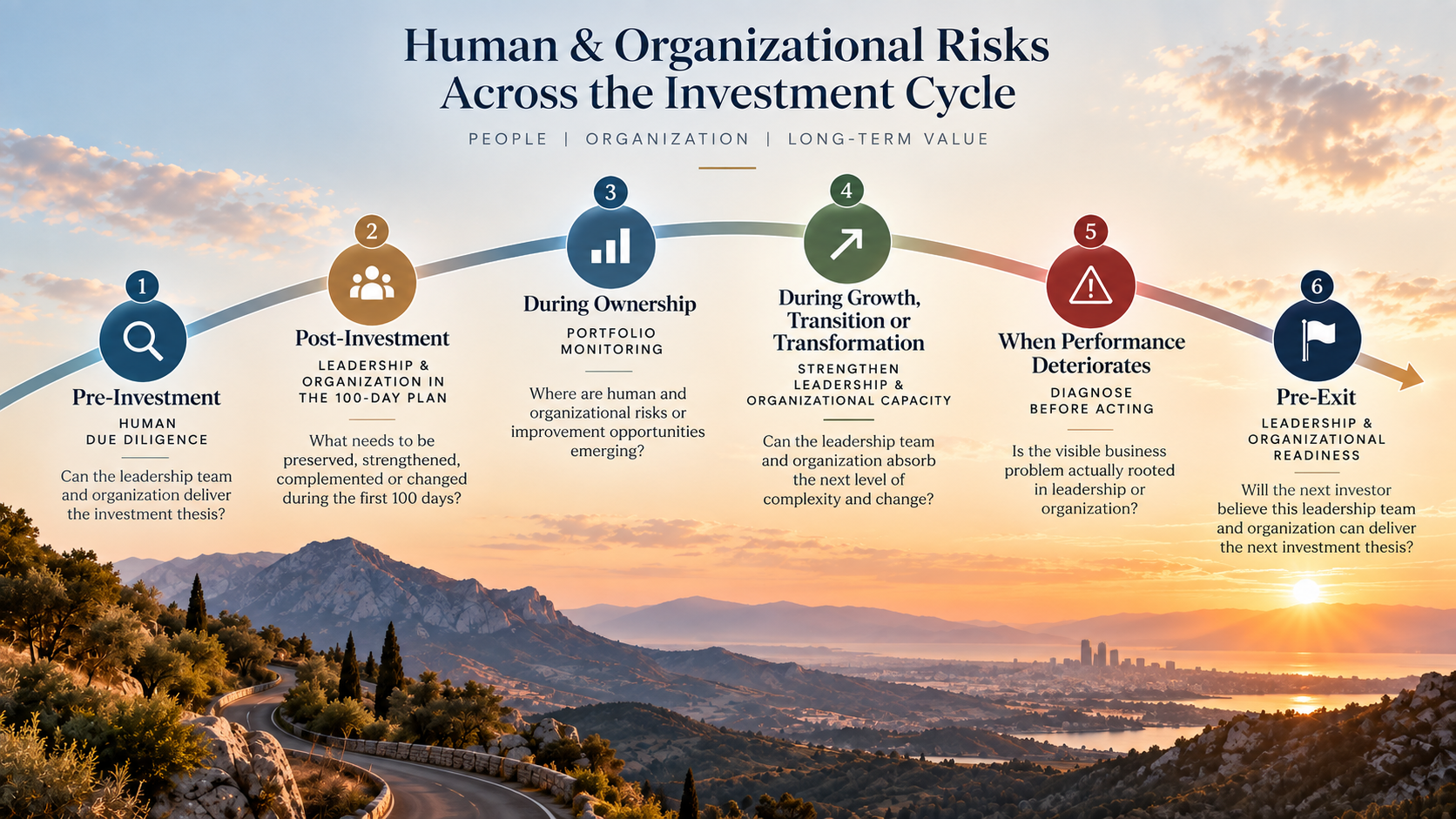

In venture capital (VC) and private equity (PE), the people behind the business are just as important as the business itself. Investors are not just backing products, markets, or strategies—they are placing their trust in the founders and leadership teams who will execute on those ideas. This is why assessing founders is crucial for understanding if they have what it takes to elevate the company to the next level and, more importantly, how investors can support them in realizing their potential.
Here are the three types of leaders VC and PE investors typically encounter, along with strategies for supporting each type:
The challenge is that these categories are rarely obvious during a deal process. Charisma, prior success and strong references can mask important limitations. A structured Executive Assessment for PE and VC investors provides a more objective view of the leader’s capabilities, risks and development potential.

1. Star Leaders
Who They Are:
Star Leaders are the complete package. These founders or leaders excel across the board, possessing strengths in vision, strategy, execution, and team building. Adaptable and resilient, they demonstrate a deep capacity to guide their business through the inevitable challenges that come with growth. Star Leaders are fast learners, capable of quickly mastering new skills and navigating complex business landscapes. Their leadership inspires confidence in both the team and investors, setting a strong tone for the company’s culture.
Why They Stand Out:
These leaders excel not only because of their innate talent but because they understand the importance of integrating their vision with practical execution. They are skilled at making strategic decisions while ensuring their teams are aligned and motivated. Investors hope to find these leaders, but they are rare.
VC/PE Strategy:
The best way to support Star Leaders is by providing the resources and strategic advice they need to accelerate their vision. They often know how to scale the business themselves but can benefit from additional expertise in specific areas, such as international expansion, M&A, or advanced financial structuring. Star Leaders don’t need micromanagement—they need resources that help them move faster and smarter.
Even strong leaders should be assessed against the specific requirements of the investment thesis. A leader may be exceptional in one context but less suited to the next phase.
2. Evolving Leaders
Who They Are:
Evolving Leaders show clear strengths but are still in the process of becoming fully-rounded. They may excel in one or two areas—whether it’s vision, product, or sales—but may lack other skills crucial for scaling the business. Evolving Leaders are works in progress, and their ability to grow and surround themselves with complementary leadership teams will ultimately determine their success.
Why They Stand Out:
With the right guidance and mentorship, Evolving Leaders have the potential to become Star Leaders. However, they also face the risk of drifting towards underperformance if their growth challenges are not adequately addressed. These leaders can become Star Leaders or Struggling Leaders depending on the level of support and self-awareness they possess.
VC/PE Strategy:
To help Evolving Leaders reach their full potential, investors should provide coaching, mentorship, and assistance with recruiting key leadership positions that complement their strengths and cover any gaps. Building a solid leadership team around them is crucial, as is encouraging a culture of learning and adaptability. Evolving Leaders need guidance to sharpen their leadership capabilities and to avoid stagnation as the company grows.
The key question is whether the gaps are developmental and can be addressed through Executive Coaching, complementary recruitment or changes in role design.
3. Struggling Leaders
Who They Are:
Struggling Leaders are founders or executives who lack critical skills or face significant weaknesses that could seriously hinder the company’s growth. These leaders often struggle with operational execution, strategic decision-making, or team management, creating bottlenecks that can prevent the business from scaling. Their leadership gaps pose significant risks to the company’s future.
Why They Struggle:
Struggling Leaders often have difficulty adapting to the rapid changes a growing business demands. Whether it’s due to a lack of experience or an inability to manage the complex dynamics of leading a scaling company, they risk stunting the company’s growth if their challenges aren’t addressed. Without significant intervention, these leaders may lead the business into crises that can be difficult to recover from.
VC/PE Strategy:
The first step is to determine if the Struggling Leader can grow into their role with the right support, or if external leadership is required to safeguard the company’s future. If the leader shows potential for growth, a robust development plan—including coaching, strategic guidance, and team restructuring—should be put in place. In more critical situations, it may be necessary to replace the founder or bring in an experienced CEO to stabilize the company and guide it through the next stage of growth.
Investors should determine whether the leader can improve, should be complemented, needs a narrower scope, or must ultimately be replaced. CEO & Board Advisory can support this decision and its implementation.
Assessment Should Lead to an Action Plan
A useful leadership assessment should not simply label a CEO or founder.
It should determine:
- the capabilities required by the investment thesis;
- the leader’s current strengths and risks;
- the likelihood and speed of development;
- the complementary resources required;
- the appropriate governance and support;
- the conditions that would justify replacement.
VC and PE investors are not just investing in businesses—they are investing in people with potential. By carefully assessing founders and leadership teams, investors can identify the strengths, weaknesses, and growth potential of those they are backing. Understanding which type of leader you are dealing with—Star, Evolving, or Struggling—allows for tailored support that maximizes their impact and ensures the long-term success of the company.
What Type of Leader Are You Backing?
WINGMIND helps PE, VC and Growth Equity investors assess CEOs, founders and leadership teams and translate the findings into concrete investment and value creation decisions.

Founder of WINGMIND, David Chouraqui is an Operating Advisor & Executive Coach to PE/VC investors, boards and CEOs. A former private equity investor and entrepreneur, he specializes in Human Due Diligence, leadership assessments, organizational diagnostics and CEO & Board Advisory, helping organizations strengthen the human drivers of execution and value creation.