
Organizational assessment
Execution problems often originate in organizational dysfunctions that accumulate gradually : competing priorities, inadequate processes, silos, capability gaps, unresolved conflicts or leadership under strain.
Taken individually, each issue may appear manageable. Together, they can materially slow decisions, weaken teams and prevent the organization from translating strategy into results.
The ten dysfunctions below are not a mechanical checklist. They provide useful lenses for understanding what is really constraining execution and which changes should come first.
In this article

Organizational dysfunction 1
Too Much Is Too Much
Lack of focus, absent prioritisation, dispersed effort
What it looks like. When priorities are unclear, projects compete for the same resources. Leaders try to pursue everything at once, diluting organizational energy and preventing initiatives from being fully executed.
Impact on execution. A widening gap between ambition and results, overloaded teams, frustration and missed opportunities.

Organizational dysfunction 2
Strategic Fog
Unclear vision, weak value proposition, fragile business model
What it looks like. When the vision, value proposition or business model lacks clarity, teams lose direction and customers have fewer compelling reasons to choose the company.
Impact on execution. Difficulty mobilising teams, slower growth and reduced attractiveness to customers, talent and investors.

Organizational dysfunction 3
No Plan
No roadmap, unclear objectives and weak performance indicators
What it looks like. Without an explicit roadmap, effort becomes fragmented. Teams do not know where to focus, how to make trade-offs or how progress will be measured.
Impact on execution. Low engagement, limited performance and insufficient transparency for stakeholders.
Organizational dysfunction 4
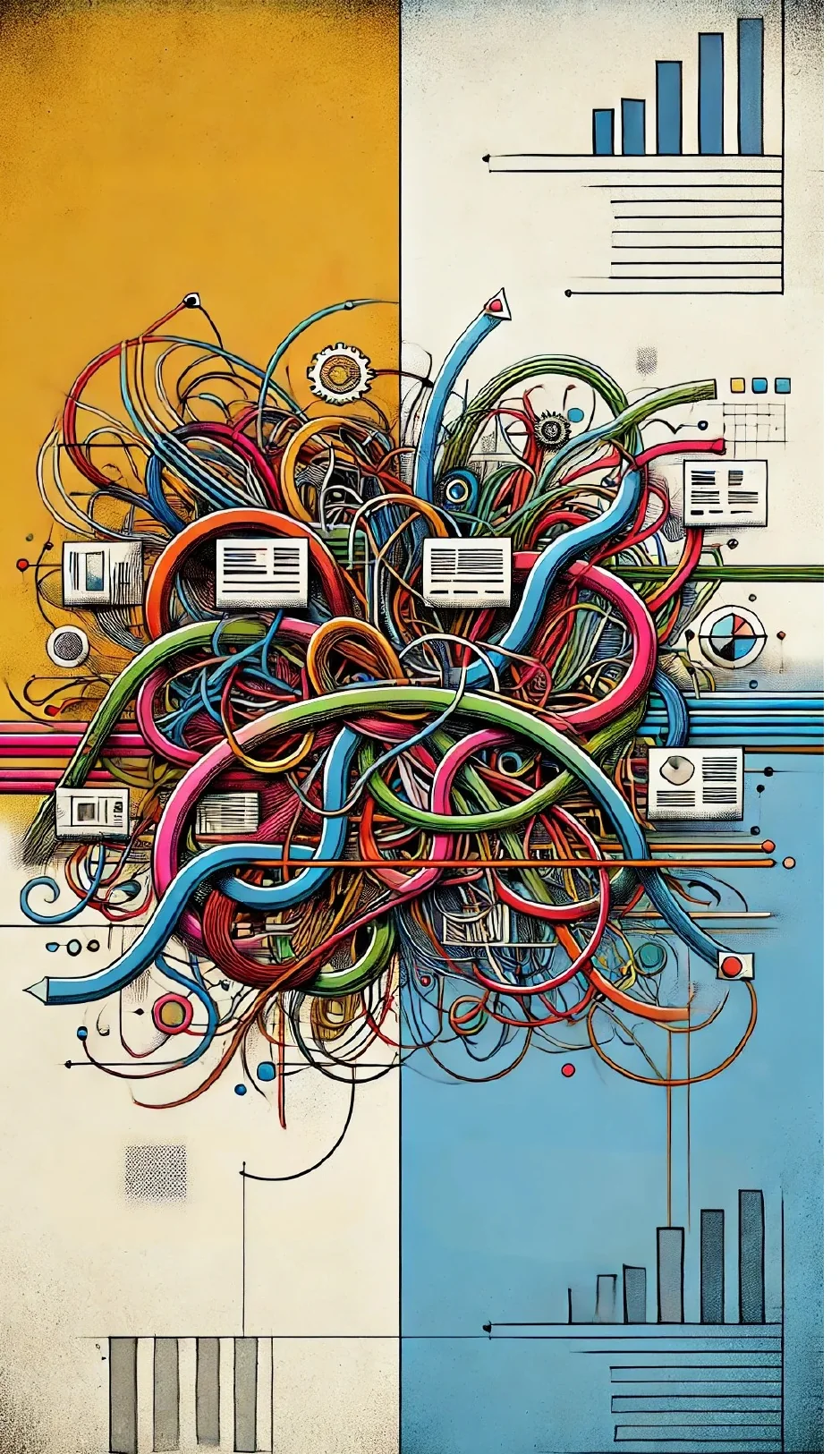
Organizational Disorder
Inefficient processes, unsuitable organization, outdated structures
What it looks like. Improvised processes, ambiguous responsibilities or a structure that has not evolved with the business slow execution and increase errors.
Impact on execution. Lost time, employee frustration, unnecessary costs and operational inefficiency.

Organizational dysfunction 5
Silos
Poor collaboration, weak coordination, limited communication
What it looks like. Teams or departments operate in isolation, with separate objectives, information and working practices. Coordination becomes difficult and effort is duplicated.
Impact on execution. Misaligned decisions, delayed projects, conflicting priorities and weak collective ownership.
Organizational dysfunction 6
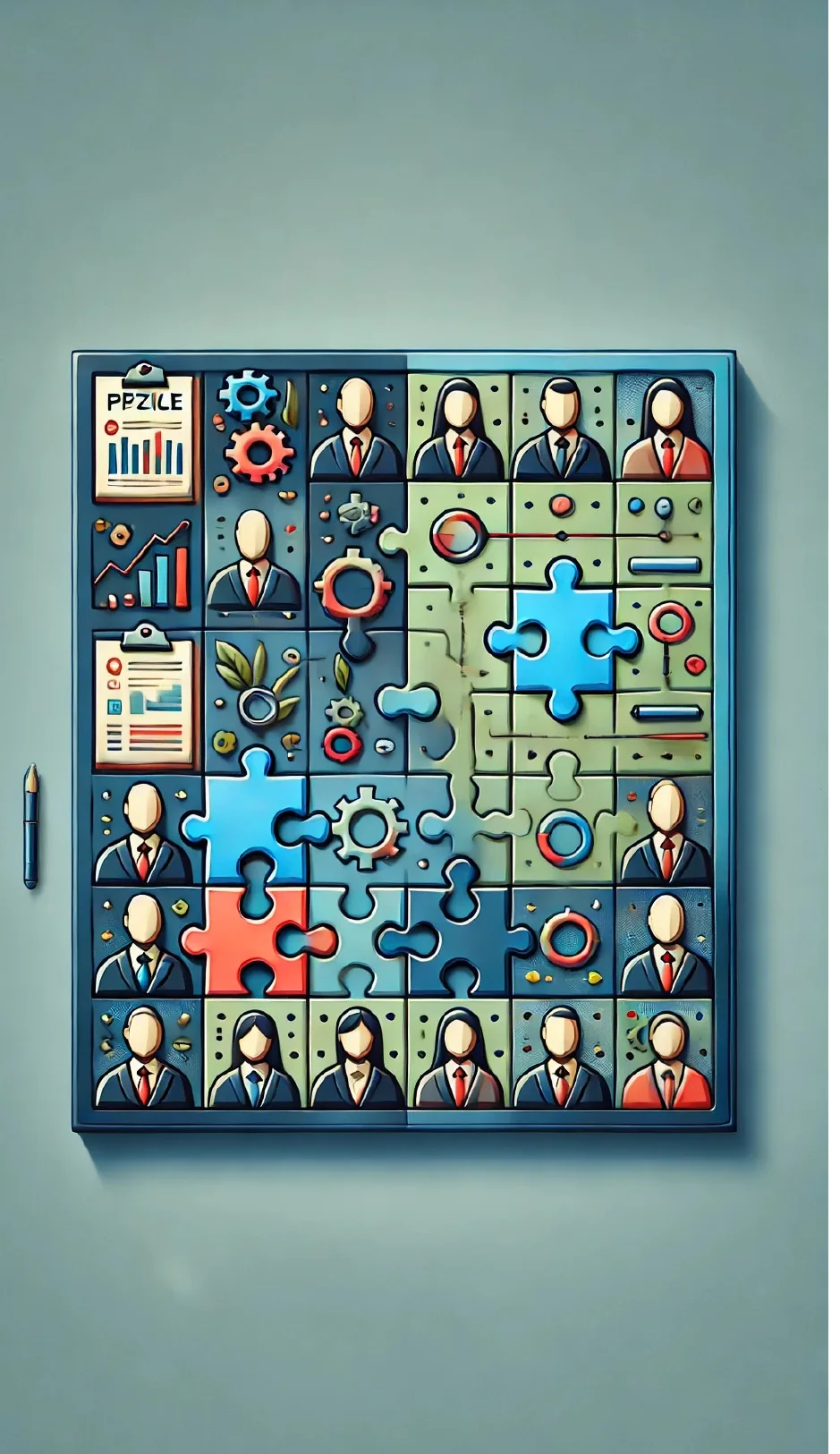
Capability Gaps
Missing skills, poorly assigned roles, weak talent management
What it looks like. Critical technical, managerial or strategic capabilities are missing, while key roles may be held by people without the mandate or capabilities required.
Impact on execution. Lower performance, missed opportunities, uneven workloads and excessive dependency on a few individuals.

Organizational dysfunction 7
Forgetting the Teams
Low engagement, high turnover, dysfunctional people practices
What it looks like. When insufficient attention is paid to employee experience, management quality and development, disengagement grows and the organization’s capacity to scale or innovate declines.
Impact on execution. Loss of talent, high replacement costs, lower productivity and a weakened collective dynamic.

Organizational dysfunction 8
Unresolved Conflicts
Latent tensions, strategic disagreements, lack of resolution
What it looks like. Disagreements between individuals, functions or executives are neither addressed nor resolved. They persist, reduce collaboration and eventually distort everyday decisions.
Impact on execution. Decision blockages, a deteriorating climate, demotivation and weaker collective effectiveness.

Organizational dysfunction 9
A Misaligned Culture
Misaligned values, rigid practices, resistance to change
What it looks like. The behaviours that are genuinely rewarded no longer support the strategy or the company’s next stage. Culture becomes a constraint rather than an enabler.
Impact on execution. Resistance to change, limited agility, difficulty attracting certain talent and constrained performance.

Organizational dysfunction 10
A CEO in Difficulty
Operational overload, weakened leadership, delayed decisions
What it looks like. A CEO who is overwhelmed, insufficiently supported or no longer aligned with the company’s needs may struggle to make strategic decisions and mobilise the organization.
Impact on execution. Loss of confidence from teams and investors, slower decision-making and stalled performance.
From diagnosis to action
A useful assessment must help prioritise the changes
The goal is not to produce an exhaustive list of problems. It is to distinguish causes from symptoms, identify the dysfunctions with the greatest effect on performance and define a limited set of coherent actions.
1. Understand
Identify the human, organizational and managerial causes constraining execution.
2. Prioritise
Separate critical issues from secondary irritants and clarify the required trade-offs.
3. Transform
Translate the assessment into decisions, ownership and concrete action.
Identify what is really constraining execution
WINGMIND’s Organizational Assessments help executives, investors and boards understand the human and organizational causes of underperformance and define the priority changes.
Frequently asked questions
Organizational assessment and execution
What is an organizational dysfunction?
An organizational dysfunction is a recurring feature of the structure, processes, coordination, capabilities, culture or leadership that prevents the organization from achieving its objectives effectively.
When should an organizational assessment be conducted?
It can be particularly useful during scaling, transformation, a build-up, declining performance, internal tensions or whenever execution no longer matches strategic ambition.
How is an assessment different from a conventional audit?
An assessment does not simply check whether processes comply with a standard. It seeks to understand the underlying causes of execution problems, how they interact and which decisions are required to improve performance.

Founder of WINGMIND, David Chouraqui is an Operating Advisor & Executive Coach to PE/VC investors, boards and CEOs. A former private equity investor and entrepreneur, he specializes in Human Due Diligence, leadership assessments, organizational diagnostics and CEO & Board Advisory, helping organizations strengthen the human drivers of execution and value creation.