
Attracting private equity (PE) or venture capital (VC) investors isn’t just about showcasing past success and presenting an exciting vision for the future. To secure investment and maximize valuation, you need to demonstrate that your business can execute on that vision and deliver the returns investors expect. Thorough preparation is essential not only to attract the right investors but also to ensure a smooth collaboration post-investment.
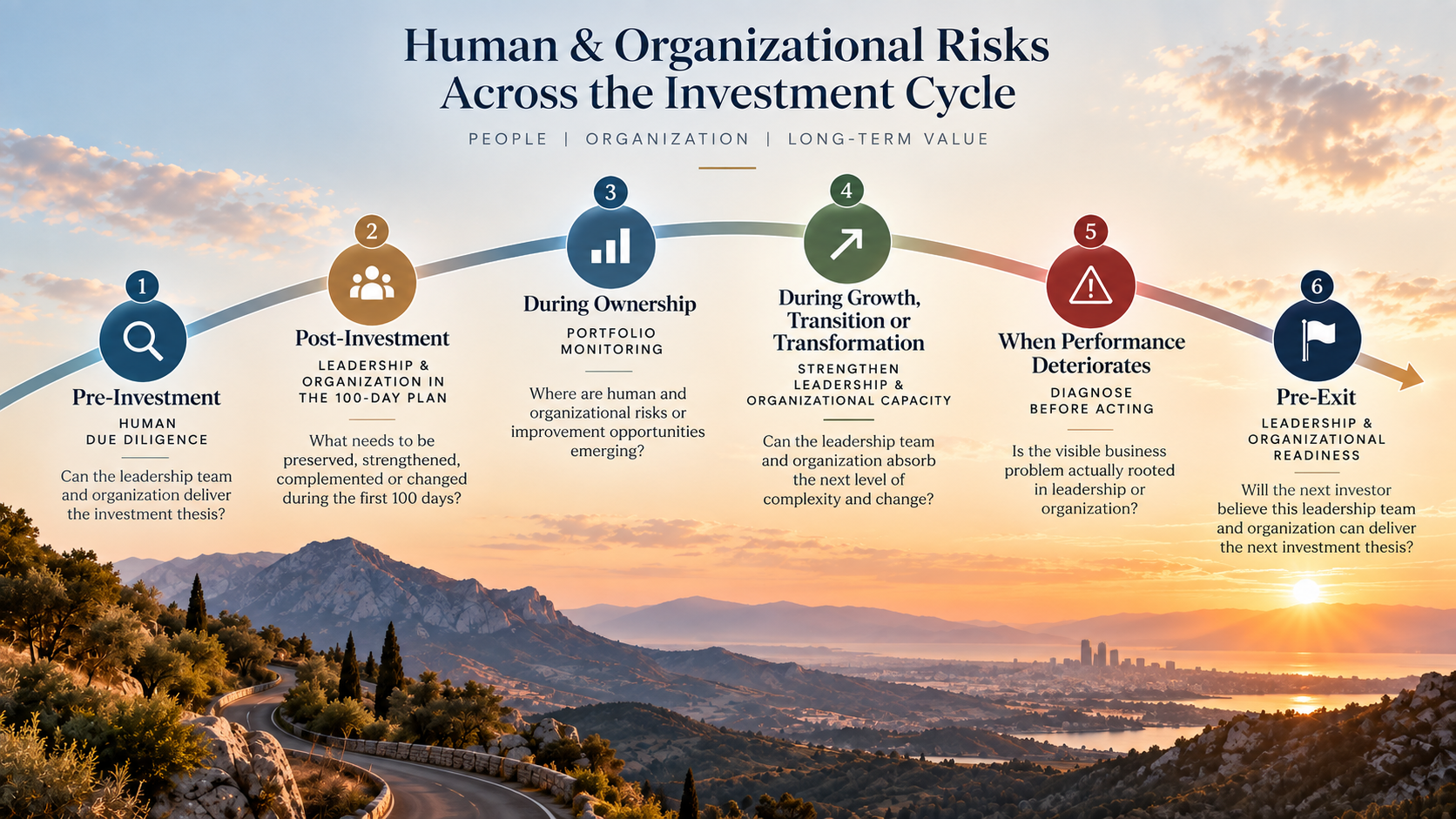
Investors will not only assess the quality of the business. They will also assess whether the founder, leadership team and organization can deliver the plan presented to them. Preparing for this Human Due Diligence is therefore an essential part of becoming investor-ready.
Here are the key areas entrepreneurs should focus on to ensure their business is investor-ready:
1. Get Your Financials in Order
One of the first things investors will scrutinize is your financials. They want to see a clear, accurate, and up-to-date financial picture that reflects quality reporting and responsible management. Make sure your financials are audited and well-organized, and if you’re not yet profitable, demonstrate a clear path to profitability. This is crucial for providing financial transparency and showing investors the return potential of their investment. Being able to explain the numbers confidently builds trust and reassures investors that their money will be managed responsibly.
Key Focus Areas:
- Audited financial statements
- Clear reporting on revenue, margins, and cash flow
- Forecasts that reflect realistic growth assumptions
2. Tidy Up Legal and Compliance
No investor wants to be blindsided by legal or compliance issues after committing funds. Ensure that all legal and regulatory requirements are up to date. This includes reviewing contracts with key stakeholders, protecting intellectual property, updating employee agreements, and resolving any compliance issues. Taking proactive steps to mitigate legal risks demonstrates to investors that you have a solid foundation and that there won’t be any unpleasant surprises post-investment.
Key Focus Areas:
- Review and update contracts and agreements
- Secure intellectual property rights
- Resolve any compliance or regulatory risks
3. Build a Strong Leadership Team
Investors don’t just buy into the business; they buy into the people running it. The strength and capability of your leadership team are critical to the success of your business post-investment. Ensure that your leadership team is well-rounded, with the right skills and experience to drive growth and create value. Filling key roles such as CFO, COO, or CMO before investors come on board demonstrates foresight and stability. Additionally, a cohesive leadership team with a shared vision is essential for long-term success.
Key Focus Areas:
- Ensure a well-rounded leadership team is in place
- Address any leadership gaps by filling key roles
- Foster teamwork, cohesion, and shared vision within the team
Founders should also be ready to discuss the team’s gaps, succession risks and ability to scale. An Executive Team Assessment can help identify these issues before investors raise them during the process.
4. Have a Clear Growth or Value Creation Plan
Investors are attracted to companies with a clear, compelling vision for growth. Before seeking investment, make sure you can articulate your growth strategy in detail, including market expansion, product development, and revenue diversification. Show how the investment will be used to accelerate this growth and create value. It’s also important to ensure that your leadership team is aligned with the strategy and that there are clear objectives, KPIs, and accountability measures in place to track progress.
Key Focus Areas:
- A clearly defined growth strategy
- Detailed plans for market expansion, product development, and revenue streams
- Alignment of leadership and teams around the strategy
The value creation plan should be translated into clear organizational requirements: future roles, critical recruitments, governance changes, operating capabilities and expected evolution of the founder’s own role.
5. Streamline Operations
Operational efficiency is key to executing your business plan and scaling effectively post-investment. Investors will look for signs that your operations are well-structured and aligned with your vision. Conduct a thorough review of your organization, key processes, supply chain, and team structure to identify and address any inefficiencies or execution gaps. Demonstrating that your business can scale smoothly with minimal disruptions will boost investor confidence.
Key Focus Areas:
- Review and optimize key operational processes
- Align operations with the company’s growth strategy
- Address any operational challenges or execution gaps
6. Evaluate and Strengthen Your Company’s Culture
A strong, scalable company culture is essential to sustain growth as your company expands. Assess whether your current culture can withstand the pressures of rapid growth and change, and whether it supports your long-term goals. Building a culture that prioritizes employee engagement, talent retention, and adaptability is key. Investors know that a positive, strong culture will help ensure continuity and stability during periods of transition and growth.
Key Focus Areas:
- Assess the scalability of your company culture
- Focus on employee engagement and retention
- Build a culture that aligns with your long-term business goals
Prepare the Human Side of the Investment
Before approaching investors, entrepreneurs should be able to answer:
- What are my own strengths and limitations as a leader?
- Which capabilities are missing from the leadership team?
- Can the organization absorb the expected growth?
- Which decisions will I need to share with investors or a Board?
- How will my own role evolve after the investment?
An Executive Assessment of the founder can provide an objective view of these questions.
Bringing PE or VC investors on board is a significant milestone for any entrepreneur. However, it requires thorough preparation to ensure you can meet investor expectations and set your business on the path to long-term success. By focusing on your financials, legal readiness, leadership team, growth strategy, operations, and company culture, you can position your business to attract the right investors and set the stage for sustainable growth.
Is Your Business—and Its Leadership—Investor-Ready?
WINGMIND helps founders and leadership teams prepare for investor scrutiny and identify the human and organizational issues that could affect the transaction.

Founder of WINGMIND, David Chouraqui is an Operating Advisor & Executive Coach to PE/VC investors, boards and CEOs. A former private equity investor and entrepreneur, he specializes in Human Due Diligence, leadership assessments, organizational diagnostics and CEO & Board Advisory, helping organizations strengthen the human drivers of execution and value creation.