

Corporate Venture Capital investors often operate with a powerful advantage: deep strategic, technological and industry knowledge.
They understand markets, technologies, customers, value chains and the strategic priorities of the corporate groups behind them.
But that strength can coexist with a different challenge.
CVC teams frequently invest in startups and scale-ups outside the corporate group’s usual ecosystem — sometimes in different countries, with founders they have never worked with, leadership teams they know only through a limited number of interactions, and organizations that operate very differently from the parent company.
In these situations, the question is not only whether the technology is compelling or whether the strategic fit makes sense.
It is also:
Do we understand the founders, leadership team and organization well enough to make the investment — and to know how to work with them afterwards?
This is a specific expression of the broader challenge explored in Investing Beyond Your Network: How to Understand Founders, Leadership Teams and Organizations Faster.
Why CVC investors can face a distinctive information gap
Corporate Venture Capital teams are often highly international.
A CVC headquartered in the US may invest in Europe or Israel. A European corporate investor may assess startups in the US or Asia. A global industrial group may pursue opportunities across several innovation ecosystems at once.
This creates exposure to opportunities well beyond the investor’s immediate corporate network.
The investment team may understand the technology, product or strategic logic extremely well while having less direct knowledge of:
- the founders’ leadership capabilities;
- how the co-founders really work together;
- whether the leadership team is sufficiently complementary;
- where internal tensions or dependencies exist;
- whether strategic alignment is as strong as it appears;
- how decisions are actually made;
- whether management depth is sufficient;
- and whether the organization can deliver the next stage of growth.
This is not a weakness specific to CVC.
It is a natural consequence of investing beyond an established relationship and knowledge base.
Strong strategic knowledge does not automatically mean strong human and organizational visibility
CVC investors may be particularly well equipped to assess:
- technology;
- product relevance;
- industrial or commercial synergies;
- market attractiveness;
- strategic fit;
- partnership potential;
- and the value of the startup to the wider corporate ecosystem.
But those dimensions do not answer another set of critical questions.
Can the founder lead the company through the next stage?
Can the leadership team operate at greater scale?
Are the co-founders genuinely aligned?
Will the organization remain effective as complexity increases?
Can senior executives be added without destabilizing the founding team?
Does the organization have the management depth and critical capabilities required to execute?
Is there sufficient strategic clarity across the leadership team?
A structured Human Due Diligence adds a complementary layer to the strategic, financial, commercial and technological assessment already performed by the investor.
The risk of over-weighting what is easiest to evaluate
There is also a more subtle risk.
When investment teams operate far from the founders’ local environment, they may naturally rely more heavily on the dimensions that are easier to compare, document and evaluate from a distance:
- market data;
- financial projections;
- customer traction;
- technology;
- product metrics;
- commercial KPIs;
- and strategic fit.
These are essential inputs.
But the harder-to-observe human and organizational dimensions can receive less attention precisely because they are less visible.
That can include:
- leadership limitations;
- founder dynamics;
- weak team complementarity;
- unclear roles;
- strategic misalignment;
- governance ambiguity;
- insufficient management depth;
- critical capability gaps;
- and organizational readiness for scale.
The result can be a gap between understanding the investment opportunity and understanding the people and organization expected to deliver it.
Management meetings are useful — but they do not reveal everything
CVC investors naturally spend time with founders during the investment process.
Those interactions are essential.
They help investors understand the vision, strategy, product and ambitions of the company.
But the transaction context also shapes the interaction.
Founders are presenting the best version of the company they have built. Investors are evaluating the opportunity within a limited timeframe.
Some important issues may therefore remain difficult to see:
- how founders react under pressure;
- how disagreement is handled inside the leadership team;
- whether important tensions are openly discussed;
- how dependent the organization is on one founder;
- whether executives truly share the same strategic priorities;
- how decisions are made when interests conflict;
- and whether the organization is ready for the next stage.
This is why evaluating founders only through meetings, track record and references can leave important questions unanswered. See also What Investors Should Really Assess in a Founding Team.
What should CVC investors assess?
The most useful approach is to connect three levels rather than evaluate founders in isolation.
1. The individual founders and key leaders
The first question is whether the individuals have the capabilities required for the next stage.
An Executive Assessment or a more investment-specific Founder Due Diligence can explore areas such as:
- leadership capability;
- judgment and decision-making;
- adaptability and learning agility;
- motivational drivers;
- ability to delegate;
- openness to challenge;
- capacity to attract stronger executives;
- potential risks and derailers;
- and ability to scale with the company.
The key question is not whether a founder is strong in absolute terms.
It is whether their strengths, limitations and trajectory fit what the business will require next.
Some founder risks only emerge as complexity increases. See 5 Founder Risks Investors Often Underestimate.
2. The leadership team
Strong founders do not automatically create a strong leadership team.
An Executive Team Assessment can help determine:
- whether capabilities are sufficiently complementary;
- whether roles are clear;
- whether strategic alignment is real;
- whether the team can challenge the founder constructively;
- whether decisions are made effectively;
- whether unresolved tensions exist;
- whether the team depends too heavily on one person;
- and whether new senior executives can be integrated successfully.
This can be especially important when founders or executives are distributed across several geographies or when the company has grown rapidly without fully adapting its leadership model.
3. The organization
The third level is the organization itself.
A broader Organizational Assessment should examine whether the organization is actually capable of delivering the strategy.
This includes:
Strategic clarity and alignment
Do the founders and leadership team share the same understanding of the company’s priorities, strategic choices and next stage?
Leadership and governance
Are decision rights and responsibilities clear? Is governance appropriate for the company’s next stage and for the involvement of new investors?
Organizational and operational effectiveness
Can the structure and operating model support greater scale and complexity?
Management depth and critical capabilities
Is there enough leadership below the executive team? Which capabilities are missing or too concentrated in a small number of individuals?
Culture, people and readiness
Can the organization absorb new executives, new investors, international expansion and greater organizational discipline without losing the entrepreneurial strengths that made it successful?
For a broader view of the human and organizational risks investors should assess, see Human Capital Due Diligence: 10 Key Risks to Assess.
CVC investors also need to assess the future relationship
Corporate Venture Capital investors are not only assessing whether to invest.
They are often also assessing whether they can build a productive relationship with the founders after investment.
This can be especially important because the corporate investor may bring more than capital.
It may bring:
- commercial relationships;
- industrial expertise;
- technology access;
- distribution;
- strategic partnerships;
- or access to the wider corporate organization.
That creates opportunities, but also potential friction.
Founders may value the strategic relationship while fearing excessive corporate influence.
The corporate investor may expect access, collaboration or strategic alignment that the startup does not interpret in the same way.
The investor therefore needs to understand not only whether the leadership team is strong, but also how the relationship is likely to work.
Questions can include:
- How open are the founders to challenge?
- How do they react to governance?
- How do they balance independence with investor input?
- What kind of support will they value?
- Where could expectations diverge?
- How should the corporate investor engage without becoming intrusive?
The broader relationship between shareholders and management is explored in The Relationship Between Investors and Management.
Shortening the learning curve before and after investment
One of the most practical benefits of independent Human Due Diligence is time.
Without a structured assessment, some investors only discover how a founder really leads, where tensions exist or what the organization lacks during the months following the investment.
An assessment cannot replace the relationship-building process.
But it can accelerate it.
It can help the CVC investor:
- build a more informed view of the founders earlier;
- understand team dynamics before they become problems;
- surface internal issues that may not be visible in ordinary deal interactions;
- identify leadership or organizational risks before they affect execution;
- clarify where support may be needed;
- and build a stronger working relationship after investment.
The objective is not artificial certainty.
It is better-informed judgment sooner.
From assessment to action
The value of an assessment depends on what happens next.
Human and organizational findings should translate into practical decisions.
Depending on the situation, the response may be to:
Improve existing leadership or organizational capabilities.
Complement the team with missing skills, executives or expertise.
Adapt roles, governance, decision rights, structures or ways of working.
Replace a leader or capability when the gap is too material to close within the required timeframe.
This makes the assessment relevant not only to the investment decision, but also to post-investment support and value creation.
A complementary layer of investment intelligence
CVC investors do not need another process that duplicates the work they already perform well.
They need additional insight where traditional investment analysis provides less visibility.
Independent Human Due Diligence can provide that complementary layer.
It helps investors develop a more reliable understanding of:
- who the founders and key leaders are;
- how the leadership team actually operates;
- whether strategic alignment is strong enough;
- where risks and internal issues may exist;
- whether the organization can execute the strategy;
- and what will need to evolve after investment.
This can be particularly valuable when CVC teams invest outside their usual geography, network or corporate ecosystem.
For the broader framework behind this challenge, see Investing Beyond Your Network.
And for investors operating across European markets specifically, see Cross-Border Investing in Europe: Closing the Leadership and Organizational Information Gap.
The central question
CVC teams may enter an investment with strong convictions about the technology, market or strategic fit.
But ultimately, those convictions still depend on people and organizations capable of executing.
The central question remains:
Can the founders, leadership team and organization deliver the next stage of the investment thesis — and what will they need to succeed?
WINGMIND helps VC, Growth and Corporate Venture Capital investors answer that question through independent Human Due Diligence, Founder Due Diligence, Executive Assessment, Executive Team Assessment and Organizational Assessment.
Related approaches
Human Due Diligence ·
Founder Due Diligence ·
Executive Assessment ·
Executive Team Assessment ·
Organizational Assessment ·
VC & Growth Investors
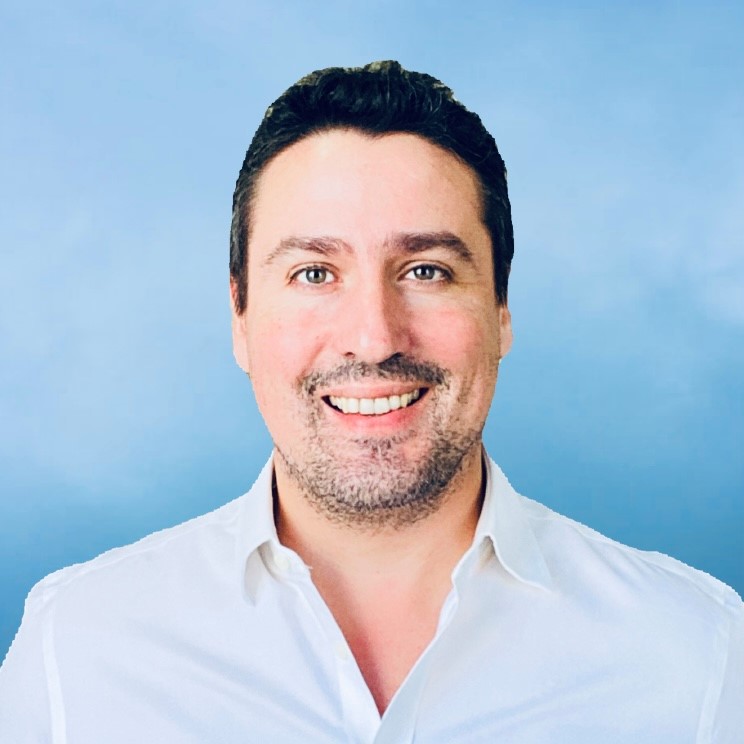
Founder of WINGMIND, David Chouraqui is an Operating Advisor & Executive Coach to PE/VC investors, boards and CEOs. A former private equity investor and entrepreneur, he specializes in Human Due Diligence, leadership assessments, organizational diagnostics and CEO & Board Advisory, helping organizations strengthen the human drivers of execution and value creation.


