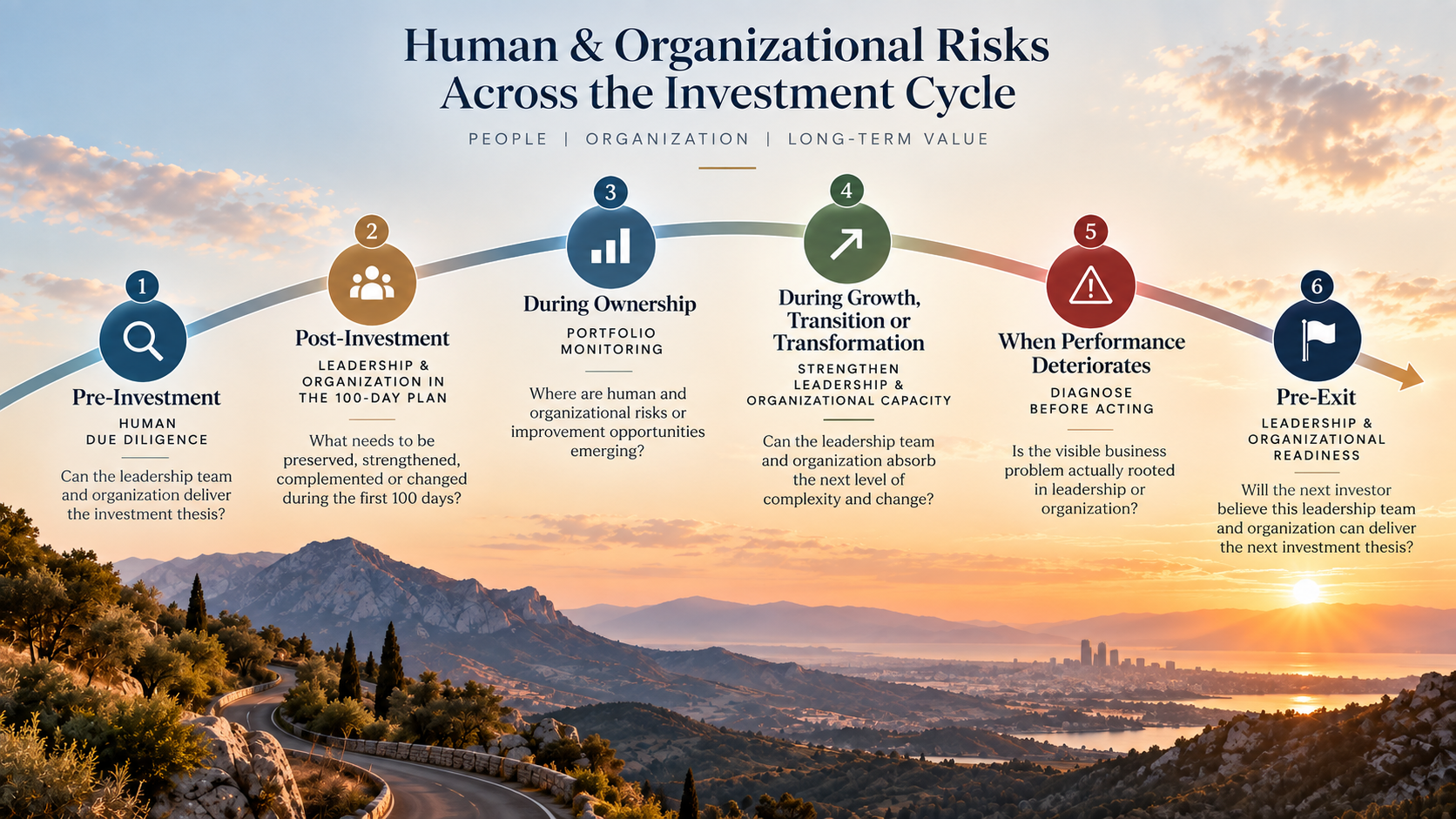

Every Venture Capital investor knows that founders are the single most important variable in the success of a startup. Products evolve, markets change, competitors emerge and business models pivot. Throughout all these changes, founders remain at the centre of almost every strategic decision the company will make.
Because of this, investors spend a considerable amount of time evaluating them. They conduct multiple meetings, challenge assumptions, discuss strategy, analyse past achievements, speak with references and gradually build a conviction about the people leading the business.
This process is both necessary and valuable.
However, it raises an important question: Is meeting founders the same as assessing them?
In most cases, the answer is no.
Forming an Opinion Is Not the Same as Conducting an Assessment
Most investment teams rely on four main sources of information when evaluating founders. They observe how founders communicate during meetings, analyse their track record, collect references from people who have worked with them and rely on their own experience and intuition.
Together, these elements help investors build an opinion. They are useful, often insightful and an essential part of the investment process. However, they do not necessarily produce a structured understanding of how founders are likely to perform over the next five or ten years.
An interview reveals how someone performs during an interview. A reference reveals how someone was perceived in a previous context. Experience explains what someone has already achieved. None of these elements, taken individually or collectively, is designed to assess leadership capability, founder dynamics or future scalability in a systematic way.
The Real Investment Question Is About the Future
The purpose of a Founder Assessment is not to determine whether founders are impressive people. Most founders who raise institutional capital are.
Nor is it to confirm whether they have built an interesting company. The market, the product and the traction already provide evidence of that.
The real question is different:
Can this founding team build the company described in the investment thesis?
This requires investors to look beyond today’s business. The company may have twenty employees today and need two hundred in three years. The founders may currently make every important decision themselves. Tomorrow, they may have to lead through an executive team, work closely with a Board, attract senior leaders, delegate authority and manage a far more complex organization.
A structured Founder Assessment therefore focuses less on who the founders are today than on how they are likely to evolve as the company evolves.
Leadership Risks Often Remain Invisible During Due Diligence
One of the challenges in Venture Capital is that many leadership risks remain hidden while the company is small.
A founder who struggles to delegate may still perform well with a team of ten. Weak governance may not become problematic until institutional investors join the Board. Differences between co-founders may remain manageable while decisions are informal, only becoming critical once the organization becomes more structured.
Similarly, weaknesses in executive hiring, decision-making or organizational leadership often appear only after the investment has been completed. By then, investors are no longer deciding whether to invest. They are trying to solve problems that have already begun affecting execution.
Founder Due Diligence helps investors examine these risks in the broader context of the founding team, governance and organizational readiness.
What Should a Founder Assessment Actually Evaluate?
Rather than asking whether founders are talented or experienced, a Founder Assessment should help answer a different set of questions.
- Can each founder continue performing effectively as the company scales?
- Do the founders genuinely complement one another, or do they share the same blind spots?
- Are they aligned on ambition, governance and long-term direction?
- How do they make difficult decisions when faced with uncertainty or disagreement?
- Are they capable of attracting and empowering leaders who may eventually know more than they do?
- Can they adapt their leadership style as the organization becomes more complex?
- Are they willing to evolve themselves as the company evolves?
These questions cannot be answered through intuition alone. They require a structured assessment that combines multiple sources of information and examines founders both individually and collectively.
A Specialized Assessment Adds a Different Kind of Insight
Investor interviews and references are designed to support an investment conviction. A specialized Founder Assessment has a different purpose: it creates an independent and structured view of the founders’ leadership capabilities, team dynamics, role fit, adaptability and potential risks.
It may combine in-depth interviews, psychometric assessments, cross-feedback, analysis of the founding team’s dynamics and a review of how the organization is likely to evolve. The objective is not to replace the investor’s perspective, but to add a layer of expertise that the traditional deal process does not usually provide.
This distinction matters because founders are not only being assessed as entrepreneurs who have built something valuable. They are also being assessed as future CEOs, functional leaders, Board partners and builders of organizations.
Assessment Is Also About Identifying Red Flags
A Founder Assessment should not be reduced to a development exercise. One of its central purposes is to identify potential red flags that could materially affect the investment thesis.
These may include unresolved co-founder tensions, excessive founder dependency, resistance to governance, declining motivation, inability to recruit stronger executives, weak decision-making under pressure or a significant mismatch between the founder and the company’s next stage.
Some findings will reinforce the investment case. Others may lead investors to adjust governance, introduce conditions, strengthen the leadership plan or prepare specific post-investment support. In some cases, the level of human risk may be significant enough to reshape or reconsider the investment decision.
A good Founder Assessment therefore helps investors decide not only whether to invest, but also how to invest and what must happen after the deal.
A Better Understanding Creates Better Partnerships
The relationship between investors and founders often continues for five, seven or even ten years. The quality of this partnership depends not only on the strength of the business, but also on how well both parties understand each other from the beginning.
A Founder Assessment creates a richer and more objective understanding of the people behind the business. It helps investors anticipate future leadership challenges instead of reacting to them once they appear.
For founders, it can also provide useful insight into their strengths, development priorities and the organizational changes that may become necessary as the company grows. When handled well, the process can therefore strengthen the relationship rather than simply judge it.
Conclusion
Every Venture Capital investor assesses founders. The real question is how.
Meetings, references and intuition will always remain essential parts of the investment process. They provide context, perspective and experience. However, they should not be confused with a specialized and structured Founder Assessment.
Understanding how founders think, lead, adapt and work together is not about replacing investor judgment. It is about enriching it with a deeper and more independent assessment of the people who will determine whether the investment thesis becomes reality.
Because ultimately, investors are not simply backing an idea or a product. They are backing the people who will have to transform uncertainty into execution over many years.
The better those people are understood, the stronger the foundations of the investment are likely to be.
For a broader view of how WINGMIND supports investors before and after investment, explore our VC & Growth Equity investor approach.
At WINGMIND, we help Venture Capital and Growth Equity investors conduct independent Founder Assessments and Founder Due Diligence. Our work provides a structured perspective on leadership capability, founding team dynamics, governance, scalability and organizational readiness, helping investors make better-informed decisions and create greater value after the investment.
Founder of WINGMIND, David Chouraqui is an Operating Advisor & Executive Coach to PE/VC investors, boards and CEOs. A former private equity investor and entrepreneur, he specializes in Human Due Diligence, leadership assessments, organizational diagnostics and CEO & Board Advisory, helping organizations strengthen the human drivers of execution and value creation.